Description
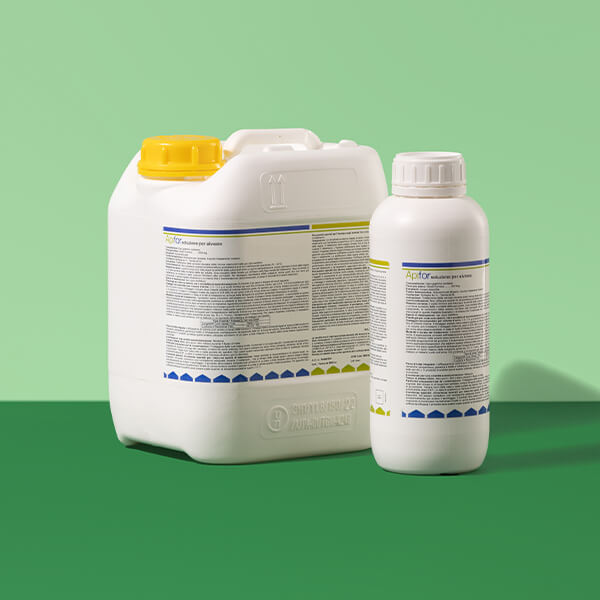
Apifor
— Veterinary medicine for the treatment of varroasis
Apifor also acts against mites inside brood cells.
Apifor acts by fumigation, or steam action. It is applicable by using an evaporator. The dosage must be adapted to the volume of the hive used. For more information, read the product leaflet carefully.

When to use it
Ideally when the outside temperature is between 10-30°C and when the super is not in position.
How to apply it
The product is introduced into the hive with the aid of suitable dispensers (evaporators) for a minimum period of 10 days or until completely evaporated. Recommended dosage per hive volume: 3.8 - 4.8 ml of product per litre of hive volume.
Standard hive volumes
|
Dadant-Blatt (10 frames) |
60L |
|
Dadant-Blatt (10 frames) + Empty honey super |
90L |
|
Beehive carrier (5 frames) |
30L |
|
Langstroth (Standard single body nest) |
44L |
|
AZ hive |
76L |
|
Lusitana and Reversível |
54L |
Our advice
The ideal outdoor temperature for good product efficacy during treatment is between 10-30°C.
Do not reduce the opening during treatment to ensure proper ventilation of the hive.
Colonies are supposed to have good food reserves at the time of treatment as they must not be fed during treatment. If necessary, feed after the end of treatment.
Use suitable dispensers/evaporators to ensure better diffusion of the vapours. Evaporation of the formic acid in the colony must take place as regularly as possible.
When handling Apifor, wear protective clothing consisting of chemical-resistant gloves, goggles and a filter mask.
Packages

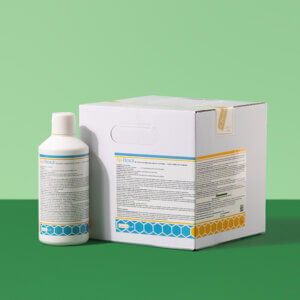
1000 ml bottle
A.I.C. no.104961014

5000 ml tank
A.I.C. no.104961026
Shelf-life

4 years
Veterinary medicine packaged for sale
3 months
After first opening of primary packaging
Frequently asked questions

What does the indication on the label "Use suitable dispensers (evaporators)" mean?
The indication “Use suitable dispenser (evaporators)” means that APIFOR must be applied exclusively using evaporators specifically designed to work with the veterinary medicinal product. These devices must ensure a slow, continuous, and controlled release of Apifor within the hive.
These devices must ensure regular evaporation for at least 10 days, avoiding excessively rapid release, which could cause adverse effects on the colony. The SPC lists examples of suitable devices such as B.L.V. Formic and Nassenheider Professional, but we also recommend Aspro Novar Form.
What kind of evaporators can I use with Apifor?
It is recommended to use evaporators that are specifically developed for the evaporation of Apifor, with a wick and a patented evaporation system that allows slow release of the acid solution (e.g. B.L.V. Formic, Nassenheider Professional or Aspro Novar Form).
I started treatment with Apifor and the temperatures have risen, what should I do?
If temperatures exceed 30°C during the first few days of treatment and side effects are observed, treatment should be suspended until temperatures drop.
How is Apifor stored and how is it disposed of?
Store Apifor in a dry place, protected from direct sunlight. Store in the original, tightly closed container in a well-ventilated place, away from sulphuric acid, strong oxidising agents (e.g. nitric acid, peroxides, perchlorates, chlorites) and sources of ignition. Medicines must not be disposed of in sewage or domestic waste. Do not dispose of in water courses as it may be dangerous for fish or other aquatic organisms. Ask your vet or pharmacist how to dispose of it.
Can I carry out a shorter treatment than the minimum of 10 days indicated?
Compliance with the application times and dosages indicated allows maximum acaricide efficacy without harming bees. Consult the product leaflet for more information.
How can I calculate the dose of medicine to be injected into the hive?
Apifor should be dosed according to the volume of the hive regardless of the number of combs contained. For more information, read the product leaflet carefully.